
40 years later
40 years of lies, deceptions, botched investigations, manufactured leads, missing evidence, conspiracy theories, cover-ups, targeted assassinations, blackmail, terrorism, false flag attacks.

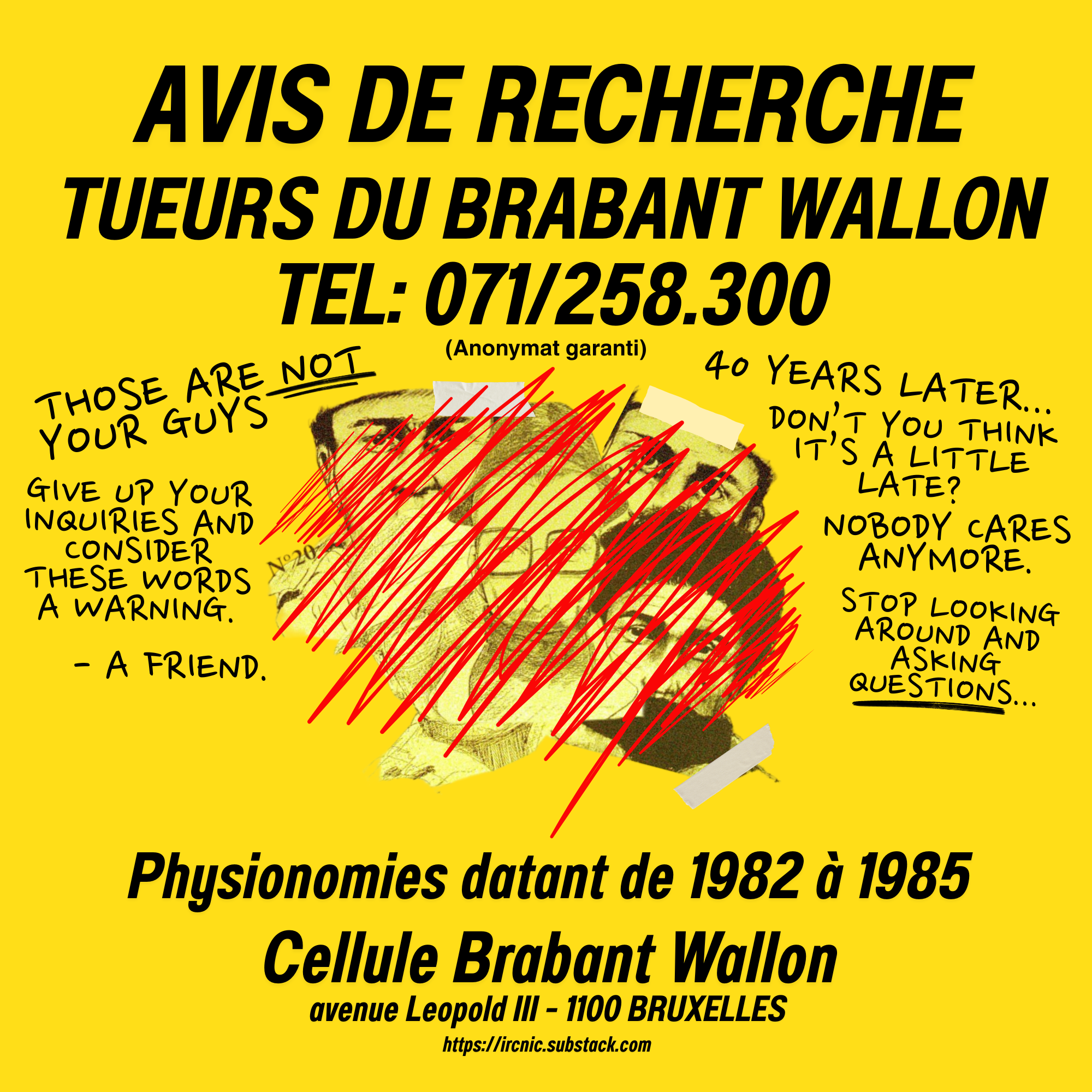
1985
About a month ago, it was the 40th anniversary of the last attack the Brabant Killers ever committed. On November 9th, 1985, at 7:40PM in Aalst, their infamous Volkswagen Golf GTI stopped in the parking lot of the Delhaize supermarket on Parklaan1. A few minutes later, 8 people were dead, 9 injured, some for life, all for less than 20.000 euros. The gang taunted the gendarmes who were in the parking lot after their attack, shooting at them until “the Killer”, the gang’s leader, slid into the back of the Golf. None of the cops had the bravery of setting up a road barrage or trying to stop them directly. One at least tried something : the Killer may or may not have been shot by gendarme Eddy Nevens as they escaped. Nevens shot 3 times at the open tailgate, directly where the Killer was sitting. It was still open when the car was spotted by witnesses a little bit later, meaning the Killer could have had trouble closing it because he had been shot. But still, the gang drove away freely into the night for the last time.


Some weird police communications were made that night, one crucial crossroad, which was supposed to be monitored by the gendarmerie, was called off last minute via radio as the Brabant Killers escaped, a call made by someone identifying with GUDULE, a code used by high-ranking gendarmerie officers to give out orders2. There also was the mysterious phone call placed to a local radio called Mi Amigo. It’s around 7PM, roughly 40 minutes before the attack in Aaalst. The DJ, Harry Van Praag, takes the call.
I’d like to dedicate a song to the Brabant Killers from the “Hofstade gang” : “Te voet naar Scherpenheuvel”. Please play it preferably around 7:15 PM sharp, but certainly not later. Otherwise it’ll be too late. Can I count on you?"
Te voet naar Scherpenheuvel (On foot to Scherpenheuvel) is one of these stupid pop songs from the 1980s. It’s a re-record in Dutch of the English song “(Is This the Way to) Amarillo” by Tonie Christie3. Scherpenheuvel is a small Flemish Brabant town that’s famous for its Christian pilgrimages, hence the name of the song. It was never established who called that night. Was it just banter from a local who didn’t know his own town would be home to a Brabant Killers attack, that same night? We can also wonder about the timing, 7:15 PM sharp. Was it to be some sort of signal? Was there a secret code waiting to be cracked in this phone call? Philippe De Staercke, one of the suspects for the Aalst attack, had a girlfriend who lived in Scherpenheuvel at the time. Was this some sort of alert to let him know to get in position for the attack? Well, for starters, the actual song was never played - the DJ couldn’t find the record and so settled for Johny B. Goode, but he still included the message from the caller.
It was a strange phone call. Most of the callers were regulars ordering a song in Aalst dialect. I recognized their voices, but this one was new to me. Pure Dutch, you didn’t hear that in Belgium. And I had never heard of the Hofstade Gang. I couldn’t find the record, so I played Johnny B. Goode, with the message that was ordered. I thought that it must have been a prankster. When I heard later what had happened twenty minutes after the record was played, in the Aalst Delhaize, I got goosebumps. I then spoke to a police officer. I made a statement, and after that… I was never questioned again. They also never asked me to identify the voices of suspects.
Harry Van Praag4
And on that same night, a man (who wanted to come forward in 1985 but was strongly advised not to do so by a policeman friend) spotted something in the Houssière woods5, a hotspot of activity for the Brabant Killers, their home turf, if you will. On that cold November night, Philippe Clerbois was in his friend’s car as they drove through the woods. It’s around midnight. He had been out dancing with three other friends and now was going home, they had no idea about what had happened earlier at the Delhaize supermarket. The headlights of the car came across something weird at a crossroad. A VW Golf was stopped, with two men standing beside it. On the ground, next to it, was something of a lump, which looked awfully like a body. A tall man was hiding something in his arms behind the Golf’s car door as the driver and the passengers of the other car drove by. An older man was standing in front of the car. Philippe said something akin to “Let’s get the hell out of here” upon seeing the scene, so his friend drove away. He feels like they dodged death that night6.
Their headlights were off. They were wearing black military-style jackets and beanies. They must have seen us coming. The car’s tailgate was open, as was the driver’s door. We were at a place called La Chapelle de Foya, where the road forks. […] One of the men was waving his arms at us. There was another man, tall, thin, and slender, with his arms hanging loosely at his sides. Finally, behind the Golf, there was a shape. In my opinion, and that of my wife, who was beside me in the car, it was a body.
We met the Killers in the Houssière woods. [...] I told the guy driving, “Listen, let’s go, we can’t stay here, it stinks.” I felt danger, I saw their outfits... [...] I was suspicious of the Giant who was behind the car door and who was hiding something in his hands. [...] We spoke with some people who advised us to keep quiet. We were afraid. We remained silent for 20 years.
Philippe Clerbois7
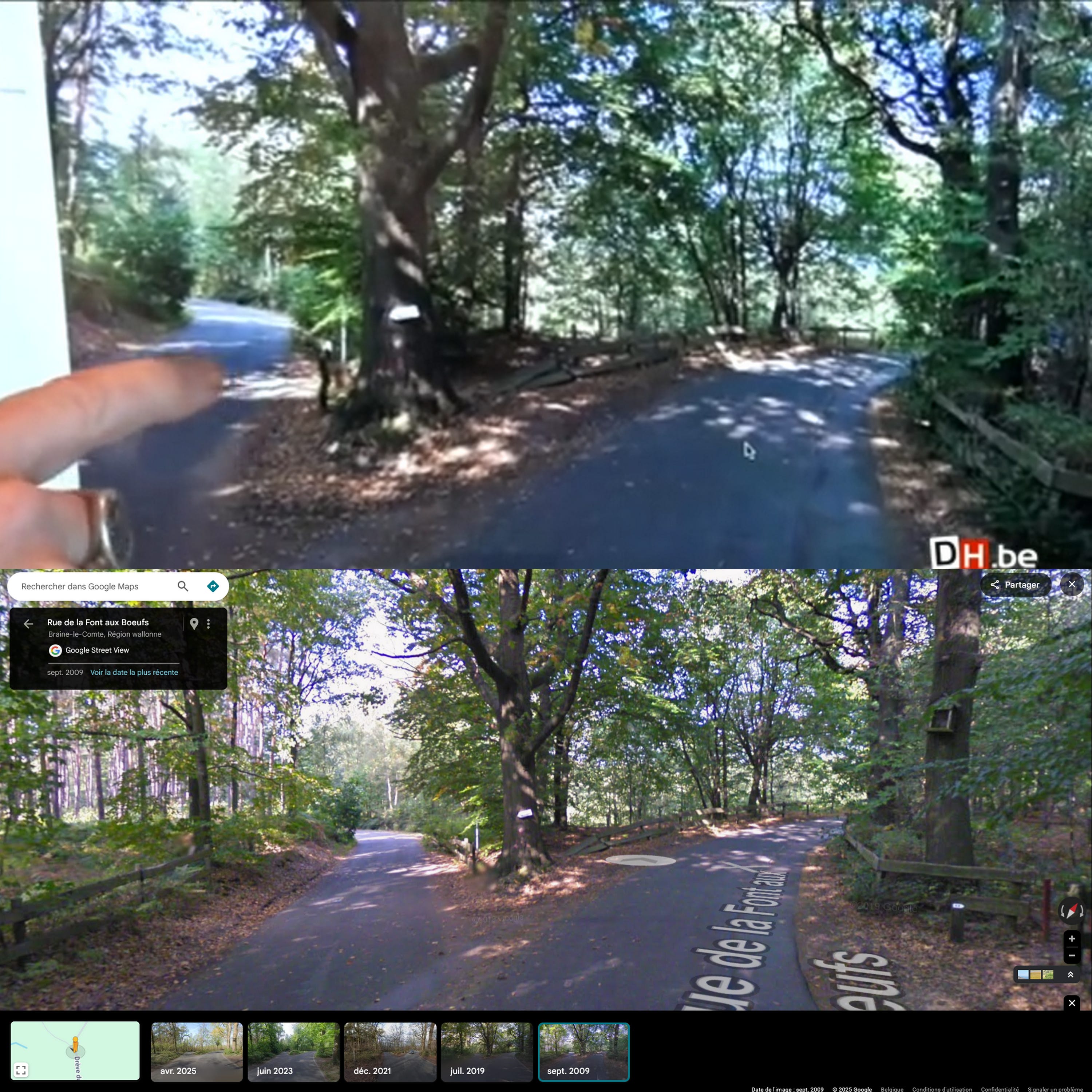
Could the Brabant Killers have been about to bury their leader, the Killer, in the Houssière woods? Philippe Clerbois also thinks one of them was waving at their car because they thought it would be their backup car. In 2004, expensive searches were made in the woods to look for a corpse. Nothing was found. After this night, the Brabant Killers were never seen again. As if they were never there to begin with, they slipped away as easily as they first appeared in 1982. They were gone forever, but not without leaving a few clues behind first.
The day after the attack, during the night from November 10th to November 11th, two cars were spotted along the Ronquières canal, going from Charleroi to Brussels. A Mercedes and a VW Golf GTI. It’s around midnight. Two men are standing near the Golf, a third one is at the wheel. A nearby French fries vendor, Franck O. (he’s selling his fries on the waterfront and living in a trailer next to his abode), hears them talking and throwing things in the water8. The two cars drive away. The Golf likely goes to the Houssière woods, where it is found burned down on November 11th. It was the vehicle used for the attacks of Braine-l’Alleud, Overijse, and Aalst, the second wave. Franck O. is heard by the police on November 11th as well. A policeman is sent in the water to look for what could have been thrown. He finds nothing. The gendarmerie does pick up ammunition tabs on the waterfront, proof that there was someone there with weapons. Nothing’s done about it. Case closed.
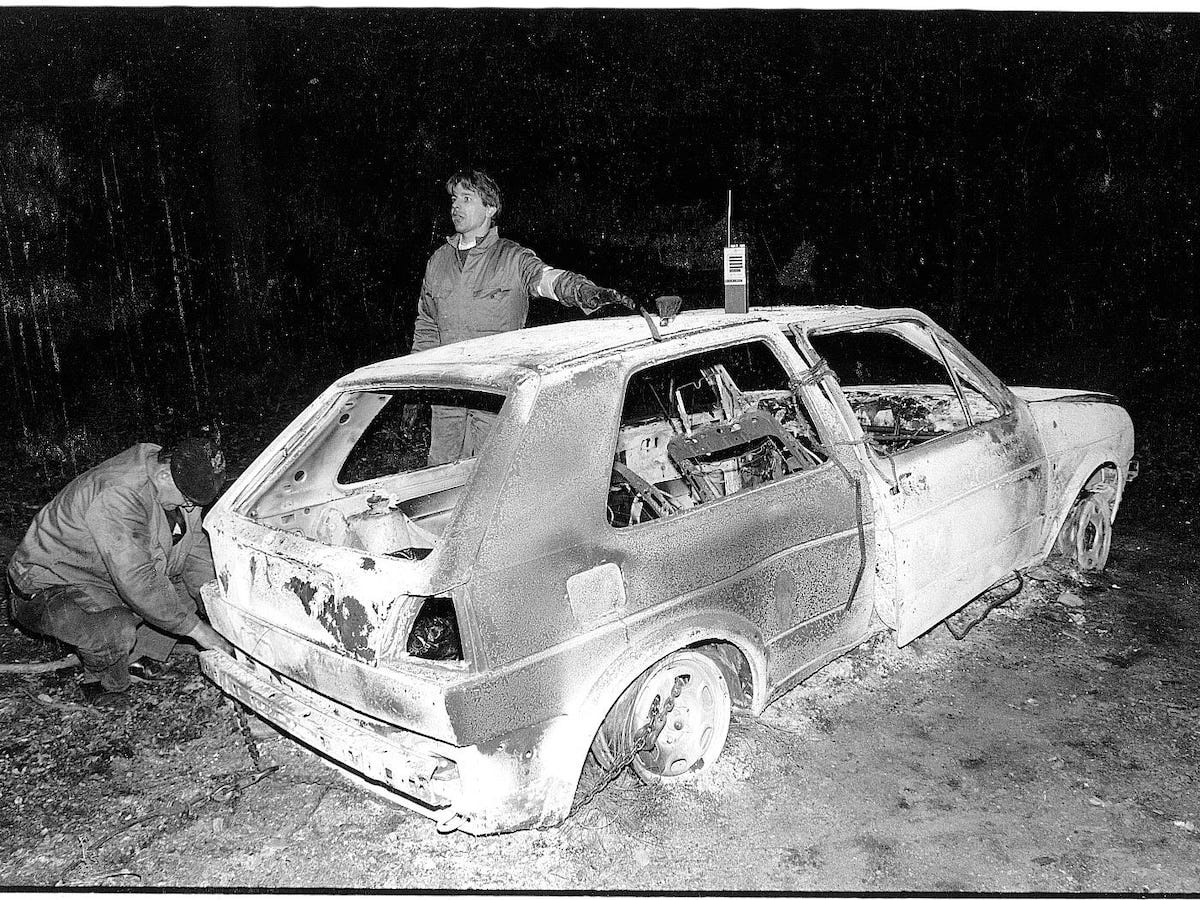
As for the burned-down Golf, there’s a lot to talk about. Among the Houssière woods, near the carcass, a mountain of evidence : burned checks from the Overijse Delhaize, a burned map where places in the Brabant region and around Charleroi are encircled, a piece of paper with words written by Jean Bultot9’s secretary (Claudine Falkenburg, a former colleague of Paul Latinus, deceased leader of the Westland New Post neo-nazi militia), a picture of a child with blonde hair, a train ticket from Oostende to Brussels, a military identity tag, five remove controls, and a bunch of burned-down weapons magazine10. Why did the Brabant Killers, who are so meticulous, leave behind all of this for the cops to find? Did they make a mistake and think it would all burn with the car, or was this planted evidence to confuse even further the gendarmes investigating? Most of the evidence was linking back to Jean Bultot. Belgian intelligence services (Sûreté de l’État, State Security Service) could be the ones who stole the documents from Bultot and planted them there to try and get him involved. Jean Bultot recalls :
How did these documents end up in the Houssière woods? I have no idea. The only thing I knew was that I wasn’t the one who brought them there.
Very recently, thanks to the book published by former State Security inspector Gérald Damseaux, ‘Les années noires vous intéressent’, I learned that documents were stolen from my office at Saint-Gilles prison by a guard. And I learned that this guard was a known informant for the State Security Service, tasked with monitoring me. He then passed the stolen documents on to his handler within the State Security Service.
If these papers were stolen from my place and received by the Sûreté (it’s in Damseaux’s book), then someone [from their service] must have brought them there.
Jean Bultot11
Gérard Damseaux officially recognized the State Security was involved but hasn’t said anything regarding it since publishing his book. We’ll get back to some of that evidence, try to remember it.


In November of 1986, a new investigating judge, Freddy Troch, is appointed to Aalst attack’s investigation, for which the “Delta” cell is in charge. Troch was reading the case files and was surprised that the man sent diving in the Ronquières canal didn’t find anything back in 1985. He wants to make sure to close that lead and so orders a new dive to look for possible evidence. This time, they’re using proper frogmen and brand new sonars lent by West German police forces. And this time around, they strike gold. A veritable arsenal of war has been found by the Delta cell’s frogmen. It’s basically most of the weapons linking all the Brabant Killers attack together :
One of the 7.65 pistols stolen from a gendarme in Nivelles (1983)
A .22 Long Rifle used in several attacks in 1983 (Berseel, Nivelles, Mons, etc.)
Approximately one hundred Legia riot gun (shotgun) cartridges (but none of the two shotguns used by the killers were ever found)
A mini safe from the Delhaize supermarket in Aalst (1985)
A sleeveless black wool coat worn by one of the killers in 1985
A bulletproof vest stolen in Temse (1983)
A bottle that contained an unidentified liquid
A duck gun, a long shotgun used for duck hunting, with the stock and barrels sawn off (stolen in Dinant in 1982, used to rob the Dekaise gun shop in Wavre later that year)
This was it. The perfect weapons stash. One that would do the job of the investigators and link all the attacks, from the first to the last, together. Once again, we can wonder why the Brabant Killers, so meticulous, would leave behind a weapons trail that would basically establish their responsibility in almost 20 attacks over a span of 3 years. Why would you incriminate yourself? Isn’t a good criminal supposed to get rid properly of “hot” weapons after they’ve been used? And what is there even to say about the fact that the police could have found this stash a year earlier, the day after the Aalst attack, if the job had been done properly. Anyway, this is how the Brabant Killers story ends, and this is how the mythology starts. The same year, in 1986, the Belgian gendarmerie forces would receive 675 Volkswagen Golf GTI cars, 1300 BMW cars, 5300 FN FAL weapons, 3100 submachine guns, new bulletproof vests, and new radio and computer technology12.
2025
Back to 2025, 40 years later. Why did I start this piece off with the last attack of the Brabant Killers? In a way, it was to show that not much has changed since November 1985. We still don’t know who the Brabant Killers are, nor their motives, nor their sponsors or backers, nor the reason why they did it. Basically, it’s a cold case. No official story. We can of course speculate, and I’ve done plenty of that. It’s quite obvious to anyone taking a look at the case that there are many elements pointing to Stay-Behind networks, neo-nazi militias, former gendarmes, far right politicians. That there’s a first wave and a second wave, and that they are wildly different in their approach and their goals. That money was never the motive (at least for a majority of these attacks) and that there were far more efficient and less dangerous ways to make more money as a criminal. There’s the blackmail aspect of it, the Pink Ballets, Dr. Pinon, etc. I also believe that the attackers were different people most of the time, some of them whom probably didn’t know they were part of the Brabant gang until after (ex. : it’s 1983, you’re a criminal known for pulling hits, you were just given a gun and a lot of money to use that gun to kill taxi man Constantin Angelou. You don’t know the man or why you’re doing it, you’re just paid to do it. In 1986 the gun’s found in the Brabant Killers stash, suddenly you go from being a random hit man to being a full time member of the Brabant Killers). Such an approach would need a logistics cell, people who prep the weapons and the mission, design an approach using military techniques, gather security plans and infiltrate the gendarmerie’s security system, maybe even train the criminals, then dispatch them and pay them before and after the job’s done. In my head, this is where Madani Bouhouche and Robert Beijer fit the most in this story, heading this cell. But I’m not here to talk to you about these two. You can hear what I think of the Brabant Killers case on Ghost Stories For The End Of The World.
The second reason I choose to start this piece with the direct aftermath of the Aalst attack is because a key piece of evidence found in the Houssière woods has just been investigated. 40 years after the fact, the key to the enigma, possibly, finally? A new lead, the “French gangsters” lead. Culprits, evidence, a lead. Can we finally solve this thing? I call bullshit. But also, I might be wrong. And this story is at least interesting in the fact it could connect the Dutroux case to the Brabant Killers. Let me walk you through all of this. And keep the evidence of the Houssière woods in mind.
1995
In 1996, in the wake of the Dutroux affair, Jean-Pierre Adam, a judiciary police officer, was assigned to the case. He ended up working on a related matter, the murder of Michel Piro, often quoted as one of the “30 suspicious deaths” surrounding the Dutroux case. Michel Piro was gunned down on December 5th, 1996, on a motorway rest area. Piro, a former pimp, now a restaurant owner, was part of the Charleroi underworld, and his wife, Véronique, was a former prostitute. Piro said to Julie and Mélissa’s parents that he had things to reveal about Dutroux and the girls and that he would love to host a dinner for them at his own restaurant, l’Arche de Noé (Noah’s ark, it’s called that because it also served as a… zoo13), near Charleroi.
Before getting to the rest of this story, I want to stop a minute on Michel Piro to really get a sense of who he is. Belgian journalist Douglas De Coninck has written a chapter about him in his book “30 dead witnesses”14. Piro was born in Charleroi on February 12th 1946. On November 8th, 1996, 2 months after Marc Dutroux’s arrest, Michel Piro calls the support committee established by the parents of Julie Lejeune and Mélissa Russo, two of Dutroux’s victims. Roland Lejeune, Jean-Denis Lejeune’s cousin (Jean-Denis is the father of Julie), is the one taking the calls that day, and Piro tells him he wants to put on a dinner in his restaurant in favor of the girls families and the support committee. The White March was 2 weeks ago, and everyone still wants to help out the families in their own ways. Piro will call again twice, until his demise on December 5th. He got shot twice at point-blank range. Once in the shoulder, once in the head. It was a clear hit.
During our conversation, my interlocutor mentioned that he wanted to meet me, probably before dinner. He had some information to share with me about Julie and Mélissa. At that moment, I understood and sensed that he clearly had something to tell me.
Roland Lejeune15
Don’t worry, I’ll take the microphone and make some revelations. I have something to say and I’ll say it, you’ll see.
Michel Piro to his sister Micheline Piro16
In the early 70s, Piro had a different life. He was a construction worker. He had a wife and a kid. He left it all behind to start over as a pimp in Charleroi. He became part of the local nightlife. He was welcomed in every club or brothel around Charleroi, knew gangsters, politicians, businessmen… By 1989, when he met his wife, who worked as a lady of the night, Véronique Laurent, Piro owned three houses that he rented out, as well as Le Sabayon (nightclub), Le Marilyn (bar), and La Terrasse (another nightclub). All were doing quite well, and so to seduce Véronique, he bought her her own bar, Le Roméro et Juliette. It was Véronique’s idea to start a zoo and a restaurant, and so Piro built L’Arche de Noé.
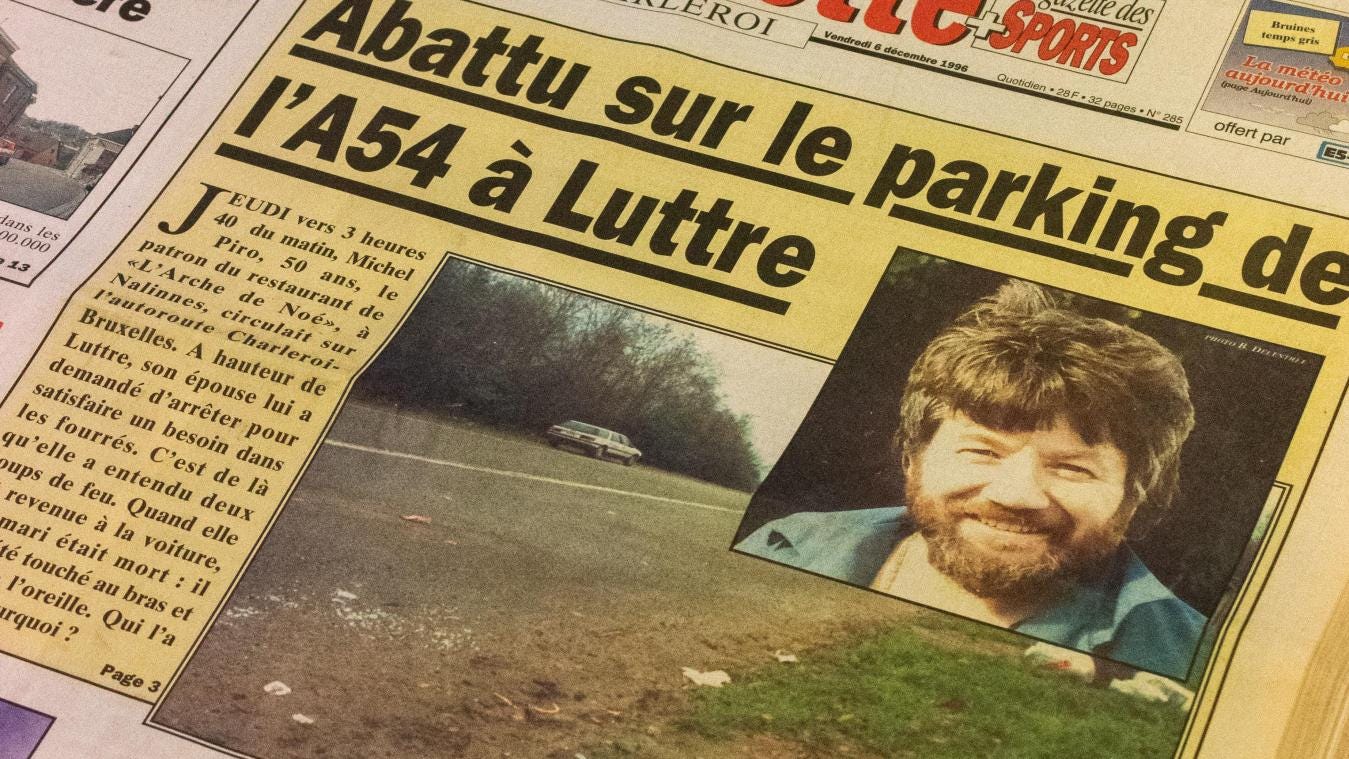
It turns out it is a small world, and Michel Piro was in touch with Marc Dutroux and Michel Nihoul in Charleroi. It’s not really a surprise. Nightlife and criminal activities go hand in hand in Charleroi. Piro was exposing stolen cars to resell in his restaurant parking lot. Not exactly discreet. And those cars came from the Courcelles gang17 supply chain. Dutroux, Weinstein, etc. And then you had Michel Nihoul, who was a regular at the Roméo et Juliette as well as La Terrasse, and that Michel Piro knew well, being the owner and all. Véronique Laurent also describes seeing Nihoul “accompanied by a black woman”18. Others from the Courcelles gang also dropped by at Piro’s establishments, including Dutroux himself. And then there’s the question of the phone calls. August 12th in 1996 is a busy day in Charleroi. The gendarmerie is setting up the raid to finally arrest Marc Dutroux the next day. On that day, the telephone from L’Arche de Noé makes 5 calls to Charleroi’s police forces in just 9 minutes. First, the gendarmerie. Then, the local police. Then, to finish it off, the judiciary police, three times. Here’s what the lawyer of the Lejeune and Russo family had to say about these phone calls :
When you see this, you get the overwhelming feeling that some people in Charleroi had learned through back channels what was being planned and that they had reason to panic. There was never any explanation for these numerous phone calls in such a short period. We don’t know who called from that number, nor what was so urgent. We know absolutely nothing.
Victor Hissel19
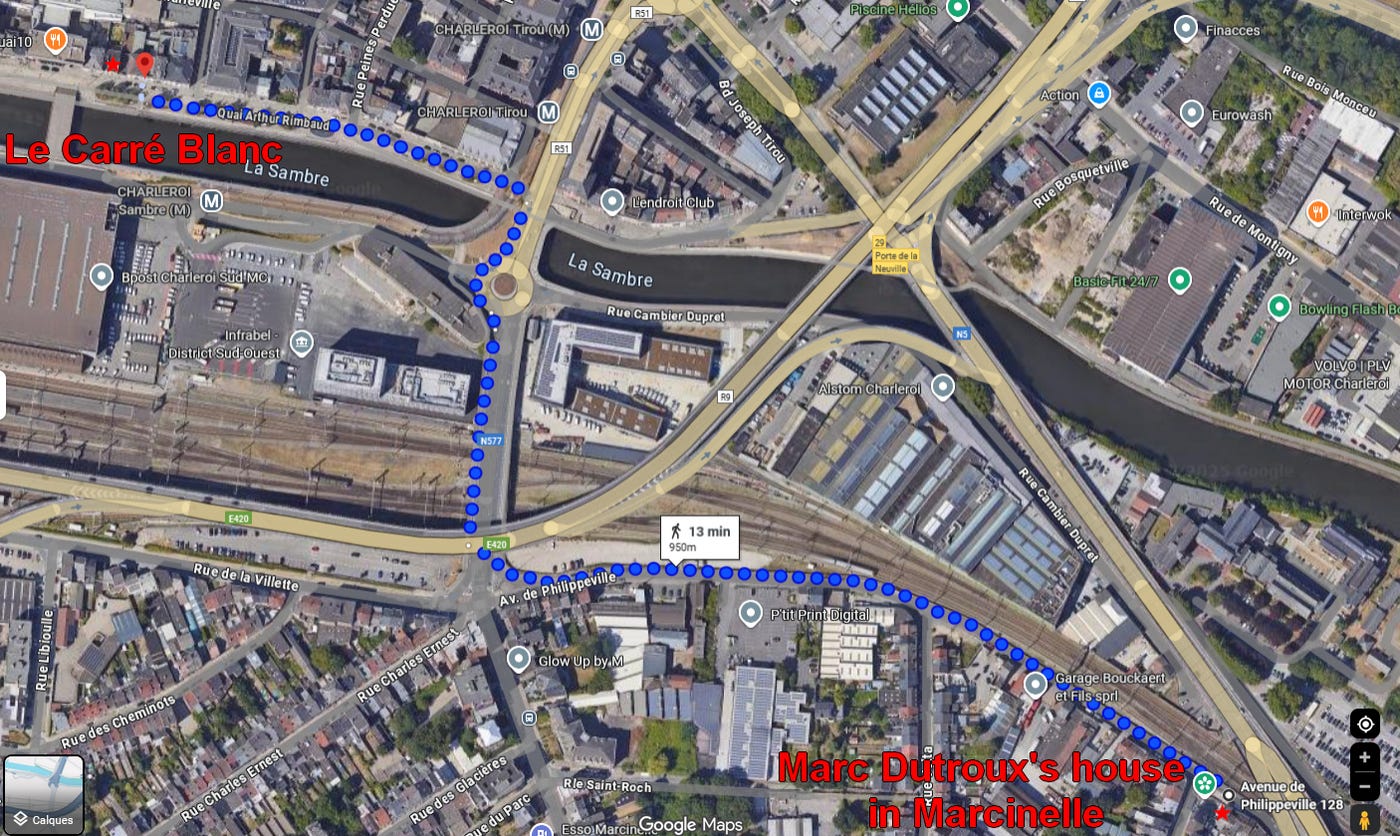
Michel Bourlet, the prosecutor in charge of the Dutroux case, auditioned some of the people close to Piro and tried to establish what it is that he had to say to the girls parents. Why even wait and not go to the police if it was so important? Piro’s sister, Micheline, said that he was “a theatrical man”, that “it wasn’t his usual style to go and tell all of this to the police”, and that he wanted a “full house, with Julie and Mélissa’s parents present”. There’s also the fact that Piro must have likely been involved in some illegal activities of his own if he had this kind of insider knowledge… In 1997, 27 acquaintances were interviewed regarding Piro’s death, and they all mentioned that “[…] He was very affected by the Dutroux case, and as a former pimp and acquaintance of the suspects, he felt somewhat guilty and was determined to organize this charity dinner for that reason”. 12 of them remembered precisely that he was about to make “revelations” at the dinner. One witness, Hélène F., told investigators and Bourlet that she had seen Julie and Mélissa in October of 1995 (a few months after their kidnapping) in front of a brothel in Charleroi, Le Carré Blanc20, owned by Charleroi’s nightlife kingpin and Michel Piro’s friend, Roger Dupuis.


The witness saw the girls in Charleroi in October of 1995 but dismissed it because she thought it sounded too dumb or unbelievable. She only picked up the phone to tell the investigators what she had seen after seeing the Dutroux case blow up all over the news in August of 1996. This is what she told the investigators :
[…] The man was holding one of the girls’ left hands, and the two girls were holding hands. When I saw the two girls, I thought of the children from Liège (Ed.: Julie and Mélissa) who had disappeared. I felt a kind of mental block; I wanted to shout their names, but nothing came out. I turned around after passing them and looked back, but all three of them had vanished. I thought they had gone into the nearest building (Ed.: Le Carré Blanc).
Hélène F.21
According to their phone logs, at the end of 1996, Piro called Dupuis 20 times, and Dupuis had called Piro 48 times. Dupuis tried to buy some of Piro’s establishments after he died, but wasn’t able to. It’s also interesting to note that Le Carré Blanc was a 13-minute walk away from Marc Dutroux’s Marcinelle house, where he kept the girls hidden in the basement walls. And then, there’s Jean-Pierre Adam (the cop in charge of the investigation of Piro’s murder) who had an incredible detail to reveal during the Dutroux trial.
I learned from a magistrate in Charleroi that the Carré Blanc had a secret passage, well known amongst the police services. I requested a search warrant from Judge Langlois, who replied that it contradicted his hypothesis but that he would consider it.
Jean-Pierre Adam22
Excuse me, a secret passage? Known by local authorities? Hidden in a club that was used as a brothel by local pimps? Where a witness claims to have seen Julie and Mélissa, 13 minutes away from Dutroux’s house, where they also were kept inside a secret passageway leading to a cage in the basement’s wall? And to top it all, Adam received this tip from a magistrate… And then of course, as you probably have guessed, Judge Langlois never gave the green light for a search of the Carré Blanc. That would have made too much sense. Langlois doesn’t even consider the murder of Michel Piro as part of the Dutroux case, to him, it’s a lovers’ quarrel.
And to finish it off with Michel Piro’s suspicious activity, there’s the fact that in his agenda, during February 1996, before the Dutroux affair was a thing, there’s a mention of a “Mélissa D.”. She’s not Mélissa Russo, but in Gerpinnes, near Piro’s restaurant, coincidentally, there was a 9-year-old girl called Mélissa D. who was followed by a grey car and asked to get in by the driver. Nothing else happened, and the child got away, but her teachers noticed she felt weird in class after, and she told them. Later, in August of 1996, when pictures of Dutroux were all over the news, the child told her mother that he was the man who had tried to pick her up. We of course know about the children that Dutroux kidnapped, but there also had to have been some who were stalked but for whom Dutroux failed… Mélissa D.’s testimony was never followed upon.
The investigation into Piro’s death led to his own wife, who admitted to having hired two French hitmen from Charleville-Mézières, just over the border : Thierry Sliman and Patrick Verdin. They’re both small-time French gangsters, and Verdin is Véronique’s brother-in-law. The reason why she wanted Piro dead? They were both cheating on each other, and Piro wanted to close down the restaurant and sell all the animals. His wife then couldn’t take it and had him killed. She paid Sliman and Verdin 600.000 Belgian francs (roughly 15.000 euros) for the hit. The trial for the murder of Michel Piro started on May 10th, 1999. 3 days later, Véronique got a 15-year sentence for the murder of her husband, but Sliman and Verdin were acquitted twice (they were judged for the crime in Belgium in 1999 and again in France in 2001 because they were French) for lack of evidence and because they were already in prison in France for another reason. Despite what Véronique was saying, there was literally no evidence pointing to Sliman and Verdin’s guilt or even their involvement at any level. There were no traces of a murder weapon. There was no getaway car. No evidence of any payment made by Véronique to the hitmen she claimed to have hired.
Assuming I would agree to murder someone for money, I wouldn’t be naive enough not to get paid upfront.
Thierry Sliman23
French judge - Are you absolutely certain that you are not protecting someone?
Véronique Laurent - I don’t want another trial.
So, in Belgium, Véronique’s guilt had been established, and Verdin and Sliman were designated as the hitmen, but they were acquitted because they already were serving an unrelated sentence in France. In France, their guilt was not even established, and they were acquitted. Another complete nonsense.
Michel Piro’s murder is a fact. Someone gunned him down on the highway. What would be interesting to know is the reason why he was killed. Because if he was specifically silenced after he said he was about to talk about Dutroux and the girls… It’s a deeper motive than a conflict between a couple. And that contradicts his wife’s version of events, who claims to have put a contract out on him. Maybe she didn’t even put on a hit on him, there’s no evidence she did besides her saying she did. Unless, of course, this reveal would have embarrassed her too? It could be that Véronique felt she had to take the sole guilt for the murder of Piro. A 15-year sentence isn’t that big of a deal, after a third of your sentence is served and if you have a good behavior, there’s a great chance you’ll be out of prison. So that’s really only 5 years. If you had to choose between taking the fall and doing 5 years of prison or die…
La piste française
You must be thinking, “What the hell has any of this stuff got to do with the Brabant Killers”, right? Patience, we’re getting there. Remember Jean-Pierre Adam, the cop investigating Piro’s murder in 1996? In 2000, he was still on the case, and he traveled to Reims’s local police forces in France to get more information on Thierry Sliman and Patrick Verdin regarding their involvement as hitmen in the murder of Michel Piro. There, while he was looking through their archives, Adam stumbled upon Thierry Sliman’s brother’s files, Xavier Sliman. Inside was the wanted notice launched in 1982 by the gendarmerie after the attack on the Dekaise gun shop in Wavre. One of the first Brabant Killers hits. Turns out that Xavier Sliman was denounced by an informant as having been a part of the Wavre attack just a week after it had happened, and that nobody had done anything about it in all these years. His picture was shown to witnesses back in 1982, and some of them recognized him. But nothing came out of it. The Sliman brothers, Xavier and Thierry, are known locally in France as small-time gangsters. Robbers, pimps, pretty violent. Xavier’s a weapons fanatic and collects nazi memorabilia. Thierry claims he’s a hitman. They have a lot of criminal friends, like Véronique Laurent’s brother-in-law Patrick Verdin, but also a tall blonde man, who could be a fit for the Giant. Adam thinks that, no doubt, they’re part of the Brabant Killers24.
In December of 2017, now retired, Jean-Pierre Adam finally spoke up after having spent the last 20 years trying to get an investigation going and gathering evidence regarding what he thought was a new lead in the Brabant Killers case. No-follow up was ever given to his inquiries, and so he decided to go public, and he wrote a book.
Adam has gathered evidence that proves, in his opinion, that Thierry and Xavier Sliman were at the center of the Brabant Killers operation, and not only just for the attack in Wavre :
Thierry Sliman was in jail in 1984 and 1986. That coincides with the end of the “first wave” and the end of the “second wave” and the Brabant Killers attack.
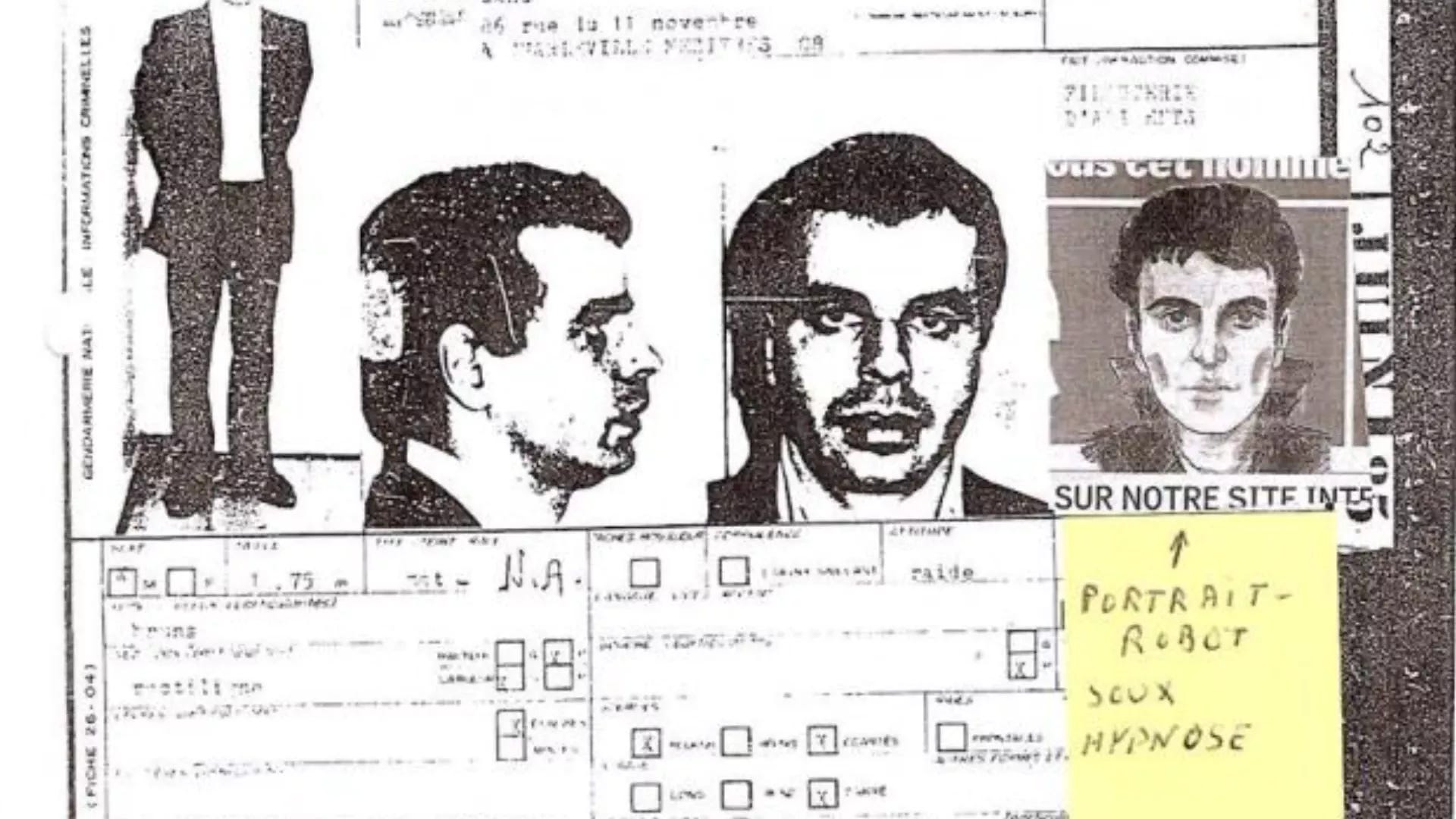
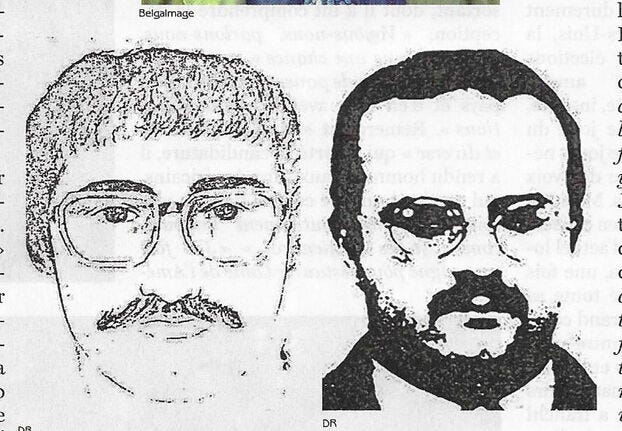
The leader of the Brabant gang, “Killer” (the guy we were talking about earlier who possibly could have been shot and killed as they escaped Aalst), was seen twice without a mask. Adam notes a resemblance between the composite sketches and Thierry Sliman. He points out that Xavier Sliman and… Michel Piro also matches some of the composite sketches established by witnesses.
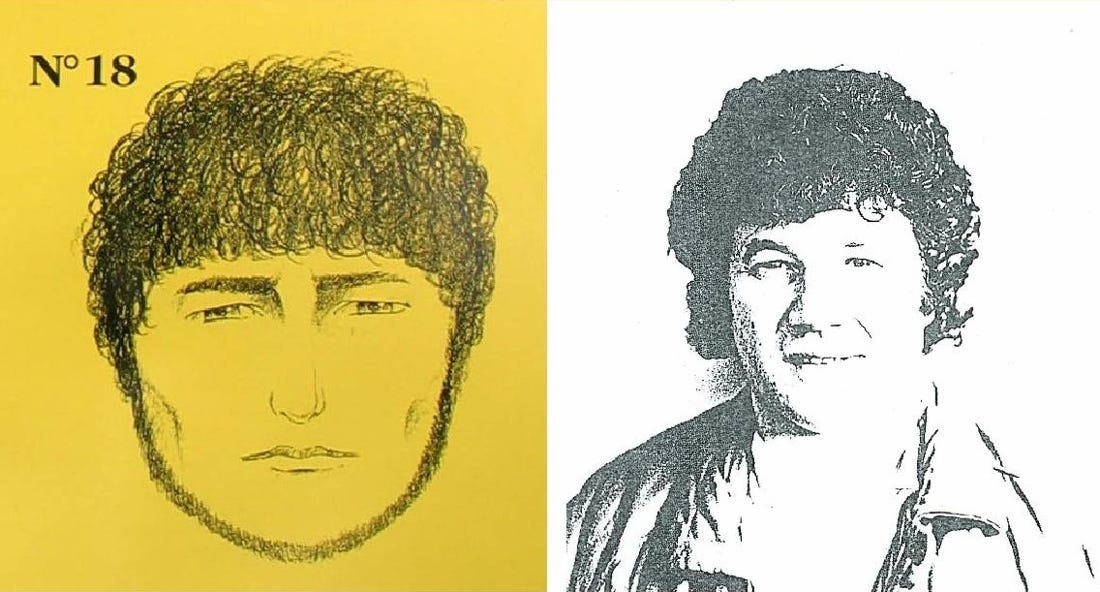
One of the cars used for the attacks of the Brabant Killers was a Volkswagen Golf, stolen in Plancenoit, on February 14th, 1983. The woman whose car was stolen had gotten a good look at her aggressor, and when she saw Thierry Sliman, she said the way he talked and looked corresponded to the person who robbed her at gunpoint.
Before anything else, I’d like to point out a little-known fact. The guy who worked in the 80s to establish the extremely famous composite sketches of the Brabant Killers is a psychiatrist who used hypnosis on the witnesses to conduct the drawings of the composite sketches. He was found to be a rapist in 2005, he regularly abused his clients, mostly women who were themselves victims of rape and incest. He spent 40 months in prison before restarting his life in France25. It doesn’t have much to do with our story except the fact that the composite sketches the investigators are working from come from a serial rapist and psychiatrist who uses hypnosis… I thought you should know.
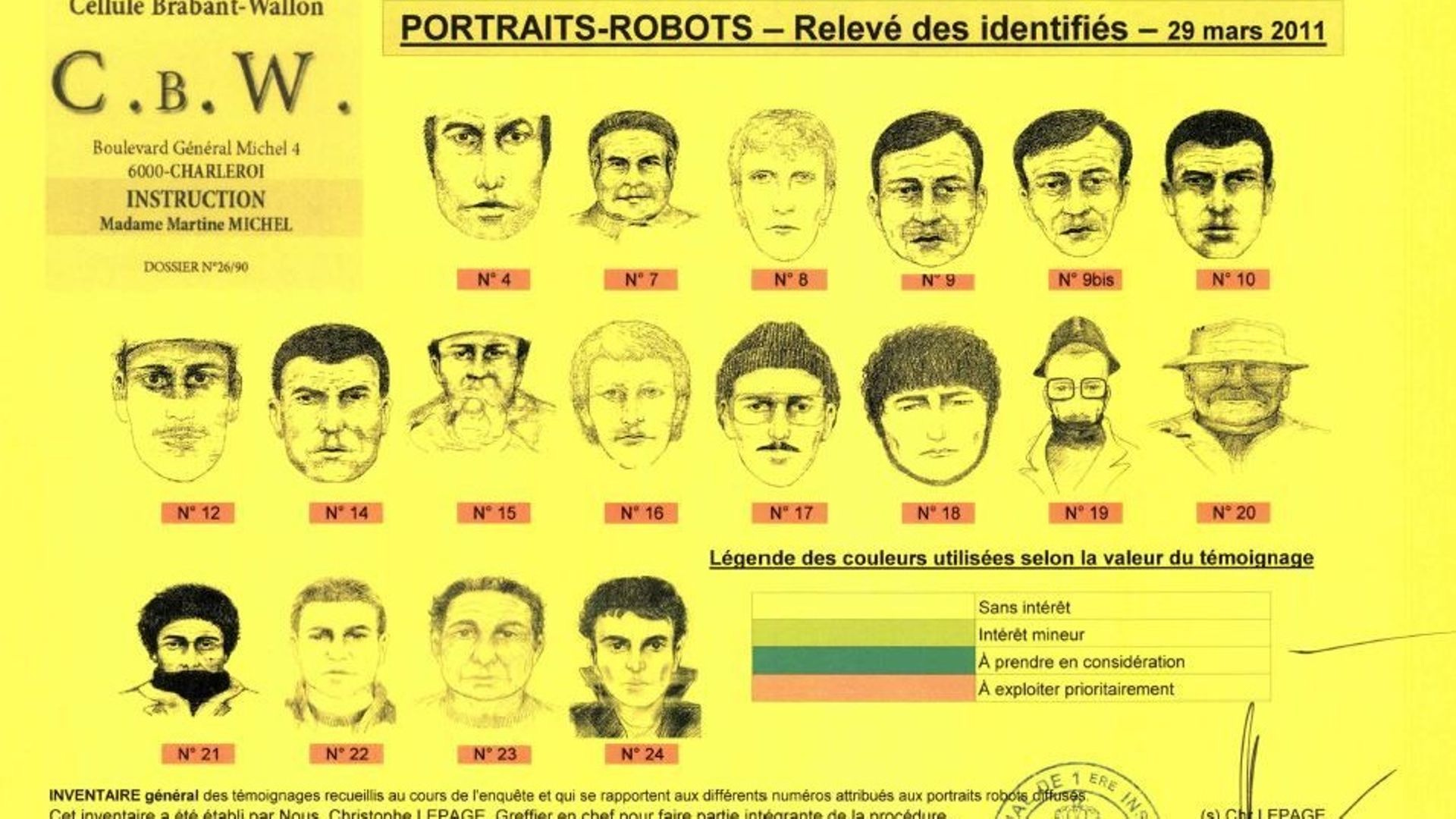
Thierry Sliman passed away in 2011, and so there was no way he could even be questioned. When Xavier Sliman noticed Jean-Pierre Adam was coming out with this story, he deleted his social network profiles. He then died of a heart attack in 2019. Patrick Verdin also admitted on Facebook that Thierry Sliman said indirectly to him that he was part of the Brabant Killers gang. Adam also thinks that he has found who the rest of the gang is :
Louis Gambini, a Corsican man. He looked like another one of the composite sketches. After the attack on the Dekaise gun shop, a knife made exclusively in Corsica was found, dropped on the ground.
Pierre Mandelli, French man, former accomplice of the Sliman brothers. He was specialized in stealing and boosting cars.
And then there’s the tall blonde bodybuilder who could fit the Giant, Edmond Masson. He’s a schizophrenic currently being treated in a psychiatric hospital.
Adam goes even further : the first official Brabant attack took place in Maubeuge (France), some of the ammo used by the gang was manufactured in France, a Corsican knife was dropped at Dekaise, the gang used fake French license plates, one of the shotguns used was originally bought in Sedan (France), …
And that’s pretty much it. Yeah, that’s the hot new lead in the Brabant Killers case. A bunch of low profile French criminals gathered and decided to terrorize Belgium from 1982 to 1985 and kill 28 people. Okay, I’m dropping the sarcasm. There’s more that has come out recently. I’m getting to it. Also, like I said, what’s also interesting is that if it was proven that the Sliman brothers were involved in the Brabant Killers, it could connect the Brabant Killers case to the Dutroux case, were they appear as the hitmen who could have killed Michel Piro. But there’s a lot of “ifs” and “buts”.
One last chance
In late June of 2025, Belgium’s federal prosecutor’s office announced the end of the investigation into the Brabant Killers case.
We can only conclude that no active investigative steps can yet be taken in this case. [...] Years of intensive research and constant efforts have not yielded the results we all hoped for. 1,815 pieces of information have been verified. New investigative methods and all modern scientific techniques have been employed. 593 DNA samples have been collected and compared. A thorough ballistic analysis of weapons and shell casings has also been conducted. This is a message that is neither pleasant to deliver nor to hear. We understand that this is a devastating blow for the victims, and we have immense compassion for them.
Federal prosecutor Ann Fransen26
Despite the terrible news for all the victims and their families, there was one small glimmer of hope. Earlier that year, in March, the Brabant case had become imprescriptible, meaning that even if the investigation closed, it could always be reopened, but only if there was new evidence put forward27. In January of 2025, multiple requests for new evidence regarding the case were introduced by lawyers28. First off, the investigating judge in charge of the case had to take a look at forgotten evidence from the Aalst attack in 1985 : Two young brothers possibly wrote down the license plate of the Golf used in the Aalst attack in 1985, and it was never investigated properly. The two kids were from the area and apparently kept a notebook in which they wrote down car brands and license plates, for fun. Two hours before the Aalst hit, they saw a Mercedes and a Golf (same pair spotted a few days later at the canal), with the people inside the cars wearing dark clothing, looking pretty menacing. They wrote down their plates. The license plates of the cars used by the Killers are very often changed, but one used this close to the actual attack could have been the real deal. The kids and their dad brought the license plates to the police in 1985, but nothing was ever done with them. The Golf was registered under a company’s name in Brussels. The lead was explored in 2025, but nothing came out of it, it was a dead end. Jean-Pierre Adam saw an opportunity. With the help of lawyer Patrick Ramaël, he pushed for the investigating judge to take a look at the French lead. And in April of 2025, the judge finally accepted : new investigations were ordered on the French lead. It all stayed pretty quiet until very recently, on December 1st, 2025.
Brabant Killers : Mons court authorizes exhumation of Sliman brothers’ mother and revives the French lead
The Mons judicial authorities have authorized the exhumation of the two brothers’ mother to collect her DNA. This genetic material will be compared with samples taken during the investigation. It should either confirm the Sliman brothers’ involvement or close a chapter of this voluminous case.
RTBF29
Just a couple of days later, news rolled in that instead of just the mother, 3 bodies were going to be exhumed.
The Mons Court of Appeal has ordered the exhumation of the bodies of the father of the Sliman brothers, their mother, and Xavier Sliman. The body of the second son, Thierry, cannot be analyzed, as it was cremated.
RTBF30
French lawyer Patrick Ramaël explained that the investigators would be collecting DNA evidence from the bodies to compare it to DNA traces from the case. It could only be a partial match but it would be enough to exclude them from the list of suspects if there’s no genetic match. That’s what we’re waiting on at the moment. I guess it will be the big reveal. Okay, do you remember when I kept telling you to remember the evidence they found in the Houssière woods following the Aalst raid? This is where it finally comes in. French newspaper Le Parisien has been covering the French lead ever since it was announced it would be looked into. On November 24th, 2025, they posted an article online titled “Brabant Killers Case : Were the perpetrators of Europe’s biggest cold case caught because of the ‘blonde girl’?”31. I’m going to let you read a few excerpts.
A few strands of blond hair in an old photograph. The clue was lost in two million pages of legal proceedings. It has just reappeared.
While several plaintiffs have been fighting for over a year in Belgian courts to demand further investigations into this French lead, a new piece of evidence has just been discovered: a fragment of a photograph, identified as belonging to a certain Véronique Laurent.
Yes, that Véronique Laurent. Michel Piro’s wife. Patrick Verdin’s sister-in-law.
In the remains of the fire, which measured 2.5 meters across, the police found copies of specialized firearms magazines, a cigarette butt, and pieces of checks stolen during a previous robbery committed on September 27, 1985, in Overijse (which resulted in three deaths, including a child). They also found these “photographic fragments,” depicting “a man in a blue checkered shirt,” whose face had been consumed by the flames, and “a blonde girl” whose features were also missing.
For reasons that remain unclear, investigators from the Brussels forensic science laboratory quickly identified the blonde girl. Next to the partially burned piece of photograph, they placed “the identity card photo of a certain Laurent Véronique, born on October 3, 1960,” according to a summary report dating from 1990.
This is weird. There are a lot of things to be found among the evidence found in the Houssière woods. There was never any mention of a blonde woman, only of a picture of a blonde child. And they’re establishing that it was Véronique Laurent based on a burned picture of a… strand of hair? It’s not even clear if Véronique had blonde hair back in 1985 or before that. There’s a weird translation issue (from the original police file in Dutch) with Le Parisien’s article when they mention what could be interpreted as a physical strand of hair as well. That simply does not exist among the evidence found in the Houssière woods.


To finish all this off, journalist Douglas De Coninck went digging for the police report mentioned by Le Parisien to see for himself what that strand of hair looks like. He found the picture. I’ll let you read what he says in an article he wrote for Humo32 :
An inventory of the Nijvel gendarmerie, in official report 1637 of November 21, 1985, lists what was found on and around the extinguished fire. […] What’s not mentioned at all, in any of the official reports from that time, is the discovery of a picture of a young blonde woman.
There’s a reason for this, as can be deduced from police report 1116, printed on October 30, 1990, at the Dendermonde judicial police station. The report mentions further examination of the found items by a specialized lab at the station in Brussels. Under a microscope, it was determined that among the found scraps of paper were also fragments of “a piece of photograph (partly burned, in two parts) of a boy/man/girl/woman in which only the white/blonde hair is visible. The rest of the face is missing.”
It wasn’t Le Parisien that concocted a possible connection to Véronique Laurent. In the aforementioned report 1116 of the gendarmerie of Dendermonde from 1990, we read: “We understand that at the time it was suspected that the person appearing in the two pieces of the photo was the woman named LAURENT Véronique, as this woman’s hairstyle resembles the pieces in question. The woman in question was known to the gendarmerie as a person involved in prostitution circles.”
So there was an explicit link made to Véronique Laurent 5 years after the fact and after the original Delta investigation cell had established only blonde or white hair was visible and that it could a child as much as it could be a man or a woman. Now, I’ll finally show you the picture of that strand of hair. You can form your own opinion.
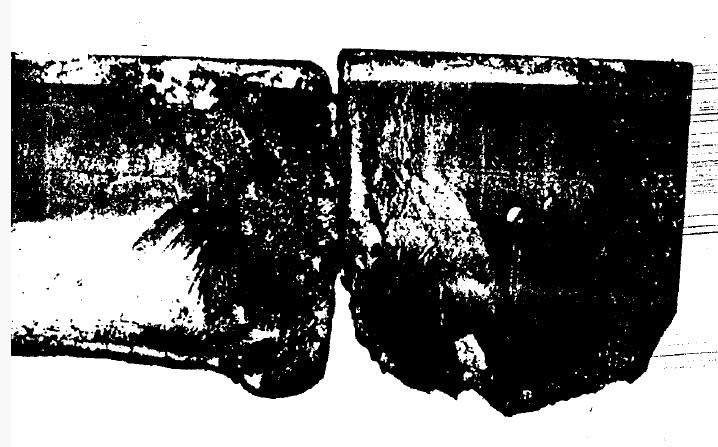
There you go. What? Can’t see it? Come on. Can’t you tell? Doesn’t this look exactly like Véronique Laurent? I’m joking. I can’t see it. I can’t see shit, actually. They scanned that picture from the police files. This is supposed to be the damning evidence that it was her all along, all these years. I can see two pieces of burned paper and some shapes on them. That’s about it. It has been pretty much established in the past 40 years that the dump of burned evidence found in the Houssière woods pointed exclusively to Jean Bultot and that it was either a setup to implicate him in the Brabant attacks or that he really was part of it to some degree. I’m sorry, but why the fuck would there be a picture of Véronique Laurent among all the stuff that belongs to Bultot? They didn’t know each other at all. Véronique has absolutely no connection to the case other than being Patrick Verdin’s sister-in-law and that guy Verdin was just a friend and a collaborator of the Sliman brothers, who themselves might not have anything to do with the Brabant Killers. I’m sorry, but you cannot tell me that you can see anything in these burned fragments of pictures. I think it’s totally unusable evidence, even if they’re black and white scans of a colored picture. Which is probably why it was discarded for 40 years.
I’m obviously not convinced by this lead. There’s a bunch of evidence I’m not even mentioning because it borders the anecdotal : during one of the attacks, the killers used trash bags from the Propsac brand, a French brand. But they were also sold in Brussels at the time… What possibly could have been the motive of this gang to commit such crimes across all of Belgium without being ever caught once? Adam claims Thierry Sliman was an avid poker player, that he could have racked up debts. That some of the hits of 1983 (Vandeneynde, Angelou and Vancamp) were made on poker players. Come on... Killing 3 people to cancel your gambling debts. What about the 25 other victims in supermarkets? What’s the motive? They owed him money too?The Brabant Killers investigation had something similar already in the 1980s with the Borains lead. They all ended up free after it was established there was no proof linking these small-time Belgian gangsters to the attacks of the Brabant Killers. Dirty hands were required for most of the Brabant Killers attacks, and I could see Thierry and Xavier Sliman taking part in the Dekaise hit, or even some other ones from the first wave. That would make sense given what Adam brings forward. But think of the rest… The second wave of 1985. Military-style hits. Rehearsed. Trained. Everyone knows exactly what to do. The Killers know exactly how to get away. It’s all very professional. I don’t see these brothers or their criminal friends being part of any of that. I think it’s fairly clear the motive is not the money. They killed families, they targeted children. Why would you kill 8 people in Aalst for less than 20.000 euros? No criminal kills unless he has to. Or unless he wants to make a point. The Brabant Killers wanted to make a point. That’s the goal of the strategy of tension.
And then, there’s the question of all the other evidence that has been gathered for the past 40 years. What do we do with it? Do we just throw it all away since we now know who the Killers are? Do we just have to forget that Madani Bouhouche and Robert Beijer killed Juan Mendez, made a plan to rob and blackmail the Colruyt supermarkets of Brussels, stole weapons from Belgium’s top gendarmerie units, attacked a gendarmerie major at his home? Do we have to forget about the fact that members of the Westland New Post neo-nazi militia were asked to monitor the Delhaize supermarkets, specifically regarding their security? It doesn’t make sense. To me, this isn’t how you explain the Brabant Killers. In this piece alone, look at all the rabbit holes you could go down just based on the Aalst attack and its aftermath. Also, if the Killer was shot dead by Nevens as he got away, how does he become a living Thierry Sliman that stays alive until 2011, according to Adam?
I would be happy to be contradicted by compelling evidence and for the families of the victims to finally discover the truth. Until then, I believe this lead is just that : a lead that still needs to be explored. I’m glad it is right now, but the titles in French and Belgian media have all been talking about “finally cracking the cold case”. I think we can find links to the Brabant Killers within the circle of, or directly with, Xavier and Thierry Sliman. I don’t believe that Xavier and Thierry were the masterminds behind the Brabant Killers’ plan. Even if the DNA comes through and establishes that they were part of the Brabant crew.
40 years later
It’s been 40 years since the last attack from the criminal gang known as the Brabant Killers. What has changed since? Not much. The investigation is still where it was when it first started : nowhere. I don’t want to be a pessimist, but in the few years I’ve been following this case, I always thought something would come along and help explain what happened. When Robert Beijer was arrested in Thailand in early 2023, I really thought this was it. They’ve finally got something significant. He’s going to speak up and admit things. But none of that happened. Nothing happened, really. I guess that’s why I’m highly skeptical about this French lead. Even if somehow Jean-Pierre Adam had solved the mystery all by himself after all these years, we would need an extensive investigation to be conducted, and it’s pretty clear that not much would be able to be done, because a lot of people have since died or gone off the radar. This all feels like smokescreen to me. One last effort, one that we know is leading nowhere, and then we’re ditching the case.
If I can wish for one thing regarding the Brabant Killers in 2026, it is for tangible evidence regarding the case. I’m tired of all these leads coming out of nowhere and going away as fast as they came up. I’ve only been following the case seriously for the past 5 years, and this has happened far too many times. I’m conscious that the French lead might just be the last shot at finding out the truth about the Brabant Killers alone. And for that reason, I can’t wait to see the DNA results. But there’s this gut feeling that they won’t be positive, simply because of everything else in this case. And that this is how it all ends, forever. I don’t want to be proven right, and if the French lead turns out to be true and we all were wrong since 1985, I’ll gladly take it. The victims’ families knowing who killed their loved ones is worth being wrong over and over. But with this case, you just know things don’t go like that. It would be too easy. This case is overly complex, and it took us hours of reading and writing to work out just the basics with Matt Ghost Stories when we did the Belgian X-Files podcast. I’m still finding out new things about the case regularly. I’m still reading books that bring in new information about the people involved or related in some way to the case. It’s a never-ending spiral. A sprawl, like Matt said. It swallows you whole and leaves you haunted for the rest of your life. You just want one thing, the truth. But it’s unobtainable. And so you keep searching. I think that’s what we need to do with cases like these. Take a step back once in a while, but just keep searching, reading documents, police files, being curious. That’s why in a way, I’m glad we’ve got the French lead and the investigation just isn’t simply over. The Brabant Killers are an important part of the Years of Lead in Europe and of Belgian history. The people have a right to know why 28 persons were killed from 1982 to 1985. The victims have a right to know. Their families too.
This is a little bit different from usual but I hope you all liked it. I wish I had something more uplifting to write about as we end 2025, but as usual on here, it’s pretty grim. Don’t lose the faith, though. I’m not. We’ll get to see soon enough about all this French lead business. Maybe I’ll be proven completely wrong and I’ll have to delete this article in shame. Who knows? I needed to get some things off my chest and hopefully this was a nice way to do it.
Hope you all have a good holiday season, and already wishing you a great year for 2026. Excited to bring you more content to read. Dutroux’s MISSING PIECES part III. Maybe more on the Brabant Killers. I’m also very thankful and happy to see so many of you supporting this blog. We’re nearing 300 followers (or subscribers? I can’t tell what’s the difference). Same on Twitter, I’m nearing 3000 followers. Thank you! I also want to give out a special thanks to the people who bought a paid subscription to this publication. Your contributions are much appreciated. As always, comments and remarks are all welcome. Thank you for reading.
IRC_NIC
All books and articles excerpts translated by myself.
In May of 1985, 6 months before the attack, the Delhaize supermarket in Aalst was photographed by Robert Beijer (former gendarme turned gangster with Madani Bouhouche, the two of them later collaborated in the private detective office/intelligence service set up by Beijer, ARI). The date was altered on the picture to avoid suspicion. Beijer later said he was there to photograph a house near the Delhaize because he was working on an adultery case as a detective. Madani Bouhouche had also gotten the protection plans of the gendarmerie for the Delhaize supermarkets in the Brabant province from his friend Christian Amory, who was part of the task force. See Guy Bouten. (2020) Tueurs du Brabant. La CIA, la Sûreté de l’État, Bouhouche, Beijer, Beuckels, et les autres, Paris : La boîte à Pandore, p. 303.
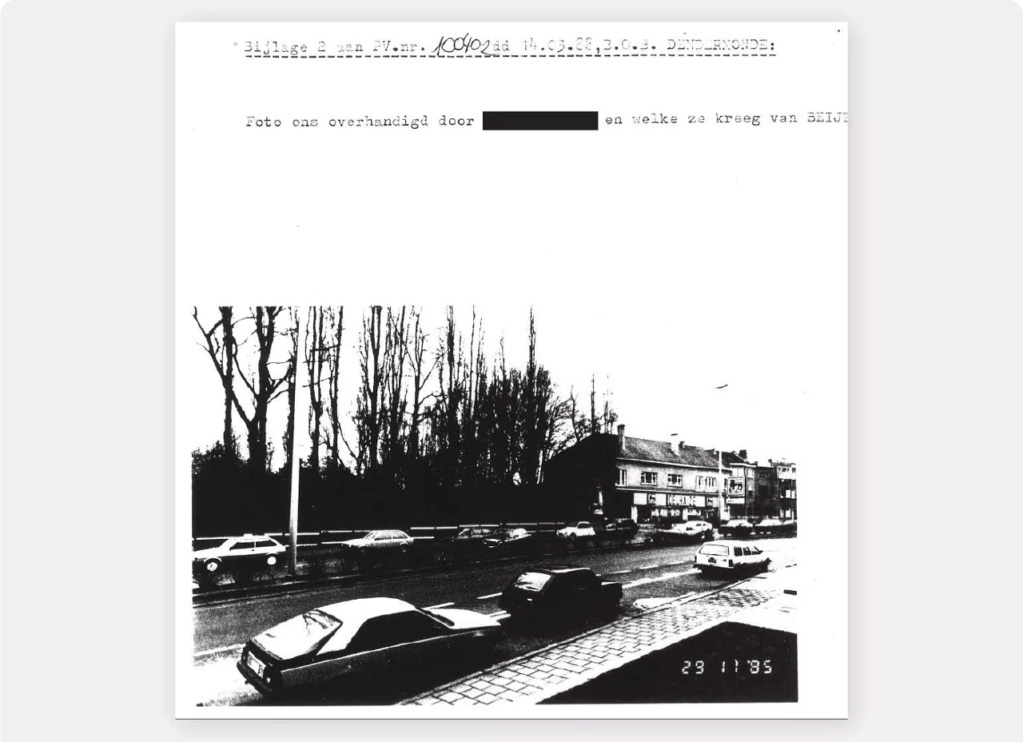
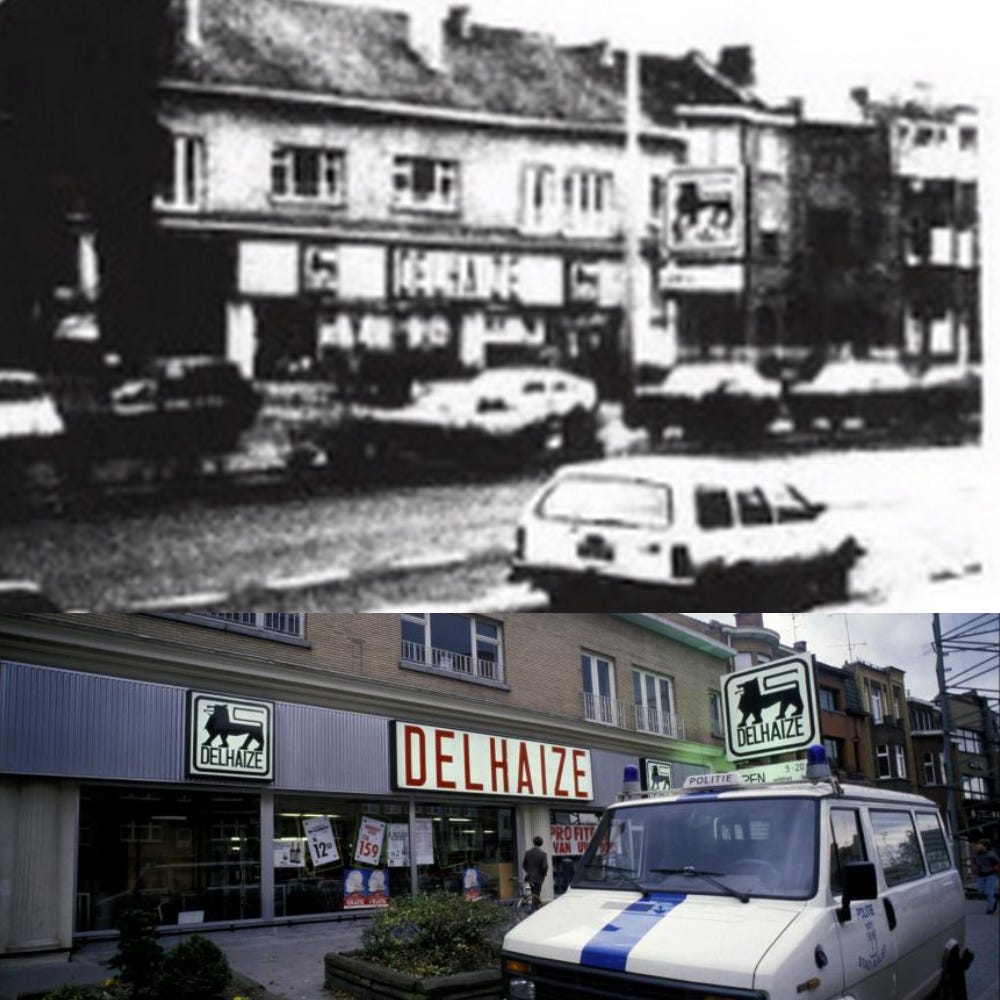
Michel Leurquin & Patricia Finné. (2024) Les Tueurs fou du Brabant. Le cold case aux 28 victimes, Paris : La Manufacture de livres, p. 107.
Weird, useless fact : British comedian Peter Kay re-released the original song in 2005 with Tony Christie for charity. Jimmy Savile, notorious pedophile, starred in the video and later had to be edited out.
The Houssière woods were the “comfort zone” of the Brabant Killers, the place where they rallied before or after an attack. A lot of evidence was picked up there by the investigating teams, starting in 1983.
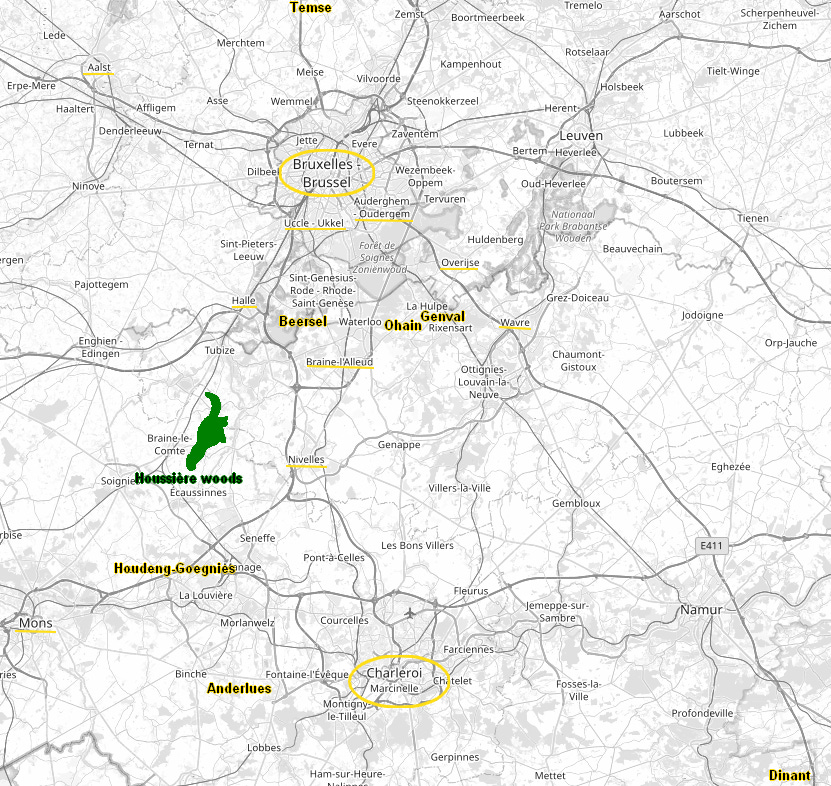
On this map, in green, you can see roughly the area of the Houssière woods. Circled are Brussels and Charleroi, the two big cities in between which most of the attacks were committed. Underlined and written if not on the map are the attacks of the Brabant Killers. By seeing it geographically, you understand why the killers would make the Houssière woods their comfort zone : it’s perfectly situated to operate in the Brabant region.
Michel Leurquin & Patricia Finné. (2024) Les Tueurs fou du Brabant. Le cold case aux 28 victimes, Paris : La Manufacture de livres, p. 108.
Guy Bouten. (2020) Tueurs du Brabant. La CIA, la Sûreté de l’État, Bouhouche, Beijer, Beuckels, et les autres, Paris : La boîte à Pandore, p. 313.
See his video interview (in French) by La DH :
Michel Leurquin & Patricia Finné. (2024) Les Tueurs fou du Brabant. Le cold case aux 28 victimes, Paris : La Manufacture de livres, p. 111.
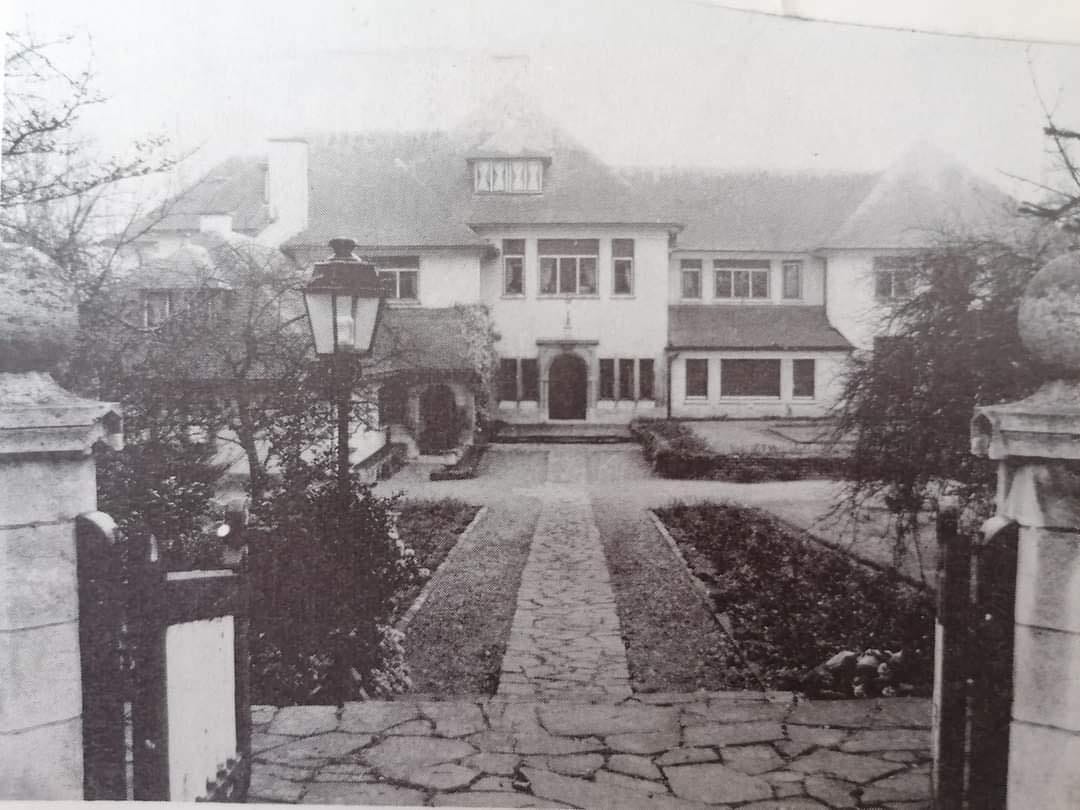
Jean Bultot was the deputy director of Saint-Gilles prison in Brussels. Politically, he’s on the far right, and he’s an acquaintance of Front de la Jeunesse leader Francis Dossogne. He’s a fan of practical shooting, and through this circle he met people such as Madani Bouhouche, Alain Weycamp (Front de la Jeunesse), Marcel Barbier (Westland New Post), etc. There are pictures of Jean Bultot at the Jonathan club in Brussels, a place where criminals, politicians, and police officers all met off duty and blew some steam off by having drinks and wrestling with naked girls in giant pools of jam. I’m not joking. It’s widely believed that the club was used to blackmail VIPs through hidden cameras. Here’s the picture of Bultot at the Jonathan, soaked in jam, in between naked women :

See Hugo Gijsels. (1990) L’enquête. 20 années de déstabilisation en Belgique, Brussels : La Longue Vue, pp. 81-84.
Guy Bouten. (2020) Tueurs du Brabant. La CIA, la Sûreté de l’État, Bouhouche, Beijer, Beuckels, et les autres, Paris : La boîte à Pandore, p. 322.
Patrick Michalle. “Tueries du Brabant: les révélations de Jean Bultot” RTBF, October 19 2018.
Michel Leurquin & Patricia Finné. (2024) Les Tueurs fou du Brabant. Le cold case aux 28 victimes, Paris : La Manufacture de livres, p. 116.
His zoo contained a lioness, two tigers, some monkeys, wolves, pumas, ponies. The guests could eat near the caged animals. A neighbor once found a pregnant tigress about to give birth in his backyard. See these Le Soir articles : UN RESTAURATEUR TUE DE DEUX BALLES, RTBF «Faits Divers» revient sur la mort de Michel Piro, Carolo du «Milieu» assassiné alors qu’il avait, peut-être, des «révélations à faire» Meurtre en eaux troubles, and this Facebook post.
Douglas De Coninck. (2004) 30 témoins morts, Wavre : Éditions Mols, pp. 101-110.
Ibid, p. 101.
Ibid, p. 104.
The “Courcelles gang” is a term used by investigators to refer to the criminal milieu surrounding Dutroux. Courcelles is a small locality near Charleroi where most of these criminals operated. Names include but are not limited to : Marc Dutroux, Michel Lelièvre, Bernard Weinstein, Gérard Pinon, Claude Thirault, Michaël Diakostavrianos (aka “The Greek”), Pierre Rochow, Philippe Divers, Patrice Charbonnier, Bruno Tagliaferro. They were all involved in shady and illegal activities, mostly centered on car and car parts trafficking. Many of these guys were informants, including Claude Thirault and car trader Gérard Pinon (who was handled by Georges Zicot). See Douglas De Coninck, Annemie Bulté and Marie-Jeanne Van Heeswyck. (1999) Les dossiers X. Ce que la Belgique ne devait pas savoir sur l’affaire Dutroux, Bruxelles : Éditions EPO, p. 38.
Herwig Lerouge. (2004) Le dossier Nihoul. Les enjeux du procès Dutroux, Anvers : Éditions EPO, pp. 190-192
Ibid, p. 105
There is another French murder case that could be linked to the Carré Blanc. According to Jean-Pierre Adam and Michel Bourlet, Jacques Heusèle, a French national who was found drowned near Charleroi, was a regular at the Carré Blanc in Belgium. The case was ruled a suicide, without an autopsy having been conducted.
“On January 25, 2009, a body was spotted by bargees in the rudder of a canal boat on the Sambre River in Belgium. It was identified as that of Jacques Heusèle, 59, an insurance agent living in Arras, France. He had been reported missing since November 17, 2008. [...] Among the personal belongings given to the victim’s family were a handwritten notebook with the page for the day of his disappearance torn out. The notebook contained numerous entries with female first names, ages (under 18), incomprehensible messages (the words “dumbbell,” “medals,” and “Olympic Games” appeared frequently), and sexually suggestive annotations indicating participation in sadomasochistic activities. The family would later find more than thirty other notebooks in Jacques Heusèle’s office, spanning a period of over 20 years.
Jacques Heusèle’s double life was quickly uncovered by his family, who learned that he was heavily in debt and had been embezzling money through his insurance agency and investments made by his close relatives. Numerous elements support the idea that Jacques Heusèle was leading a double life; notably, he had created a post office box to prevent any mail from reaching his home, set up a secret phone line whose number only he knew, and made numerous transfers to unidentified accounts. Despite Jacques Heusèle’s significant debt, he owned the building housing his agency, and its sale would have allowed him to pay off his debts. Based on these numerous elements and unanswered questions, Jacques Heusèle’s widow and two children are convinced that the insurance agent did not commit suicide but was murdered because of his involvement in a prostitution ring, possibly even a pedophilia ring.
Jean-Pierre Adam, a retired police officer who investigated Marc Dutroux, and Michel Bourlet, a former public prosecutor in Neufchâteau from 1984 to 2007, suggest the possibility that the two men may have known each other or at least moved in the same circles, though they offer no proof. The town of Jeumont appears repeatedly in both cases: Jacques Heusèle was from there, his parents owned a pharmacy, and his brother Christian (who died on October 22, 2023) still lives there. Marc Dutroux also frequently visited Jeumont. The two men believe that Jacques Heusèle, like Marc Dutroux, may have frequented the Carré Blanc, a club that investigators identified during their investigation as a place where underage girls were abused.” (Wikipedia)
Ibid, p. 105
A.-S. G. “La piste du Carré Blanc relancée” La Dernière Heure, April 8 2004.
Ibid, p. 109
For the whole French lead section, see Michel Leurquin & Patricia Finné. (2024) Les Tueurs fou du Brabant. Le cold case aux 28 victimes, Paris : La Manufacture de livres, pp. 395-400.
Pierre Nizet. “Le psy belge avait violé 4 de ses patientes… il exerce aujourd’hui en France” RTBF, March 27 2024.
La rédaction, Belga. “Tueurs du Brabant : fin de l’enquête, les familles des victimes ne cachent pas leur incompréhension” RTBF, June 28 2024.
La rédaction, Belga. “Les crimes les plus graves commis en Belgique, comme l’affaire des Tueurs du Brabant, ne pourront plus être prescrits” RTBF, March 28 2024.
Africa Gordillo, Belga. “Tueurs du Brabant : les enquêteurs doivent poursuivre leurs recherches” RTBF, January 27 2025.
Africa Gordillo, Pol Loncin. “Tueurs du Brabant : la justice montoise autorise l’exhumation de la mère des frères Sliman et relance la piste française” RTBF, December 1 2025.
La rédaction, Belga. “Tueurs du Brabant : trois membres de la famille Sliman seront finalement exhumés” RTBF, December 3 2025.
Christel Brigaudeau. “Affaire des tueurs fous du Brabant : les auteurs du plus grand cold-case d’Europe confondus par la « fille aux cheveux blonds » ?” Le Parisien, November 24 2025.
Douglas De Coninck. “Is dit de ‘bom’ onder het onderzoek naar de Bende van Nijvel? ‘Dit lijkt eerder op een uitgeduwde sigaret’” Humo, November 24 2025.
I read J.-P. Adam's book, the Sliman lead is very interesting and he makes a somewhat convincing case. It is very depressing that there is no will to solve this case.
The case can very easily be solved with the amount of DNA they collected: DNA phenotyping is out there to make composite sketches, and analysis can determine the ancestry of some of the killers at the very least (French or Flemish, Algerian like Bouhouche or Moroccan like the Slimans, etc...).
They could even do genetic genealogy as well, I don't know about Belgium but any DNA genealogy is illegal in France, so the French send a letters rogatory to the FBI and contract the work to the Americans as a loophole. That could definitely be done too, but of course they won't & we know why.
yes! Also consider something on Raekmakers... or the other weird parallel worlds moving during Dutroux.. can't wait for part 3 of Missing pieces... love your work!